

A Level, AQA
Course Description
A-level 3D Design is a creative and practical course that allows students to explore the design and manufacture of three-dimensional objects, products and environments. Students develop their ability to generate original ideas, investigate materials and processes, and communicate their designs through drawing, modelling, photography and digital technologies.
Throughout the course, students will explore how designers respond to functional, aesthetic, social, cultural and environmental considerations. They will investigate the work of historical and contemporary designers, architects and makers, using this research to influence and develop their own ideas.
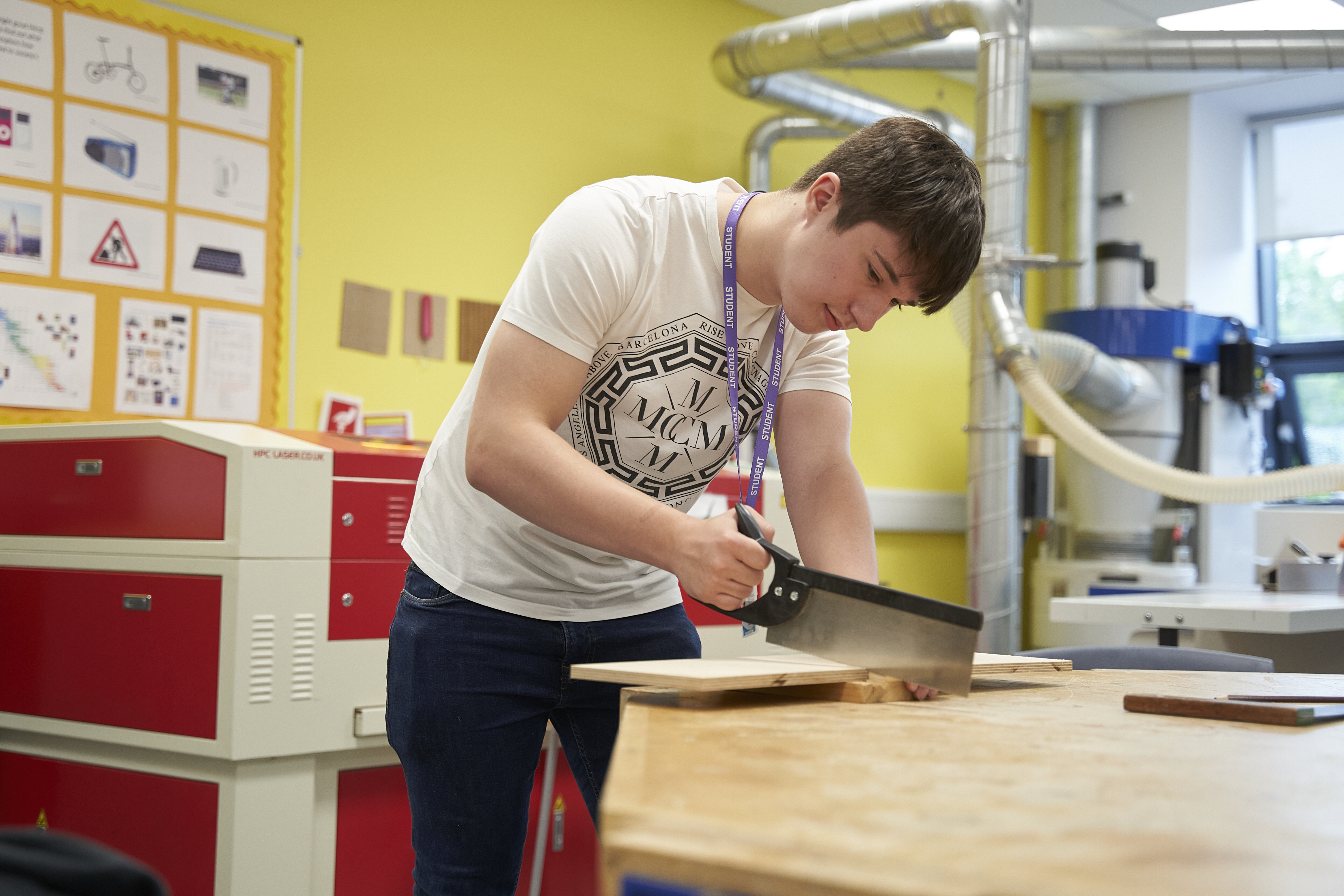
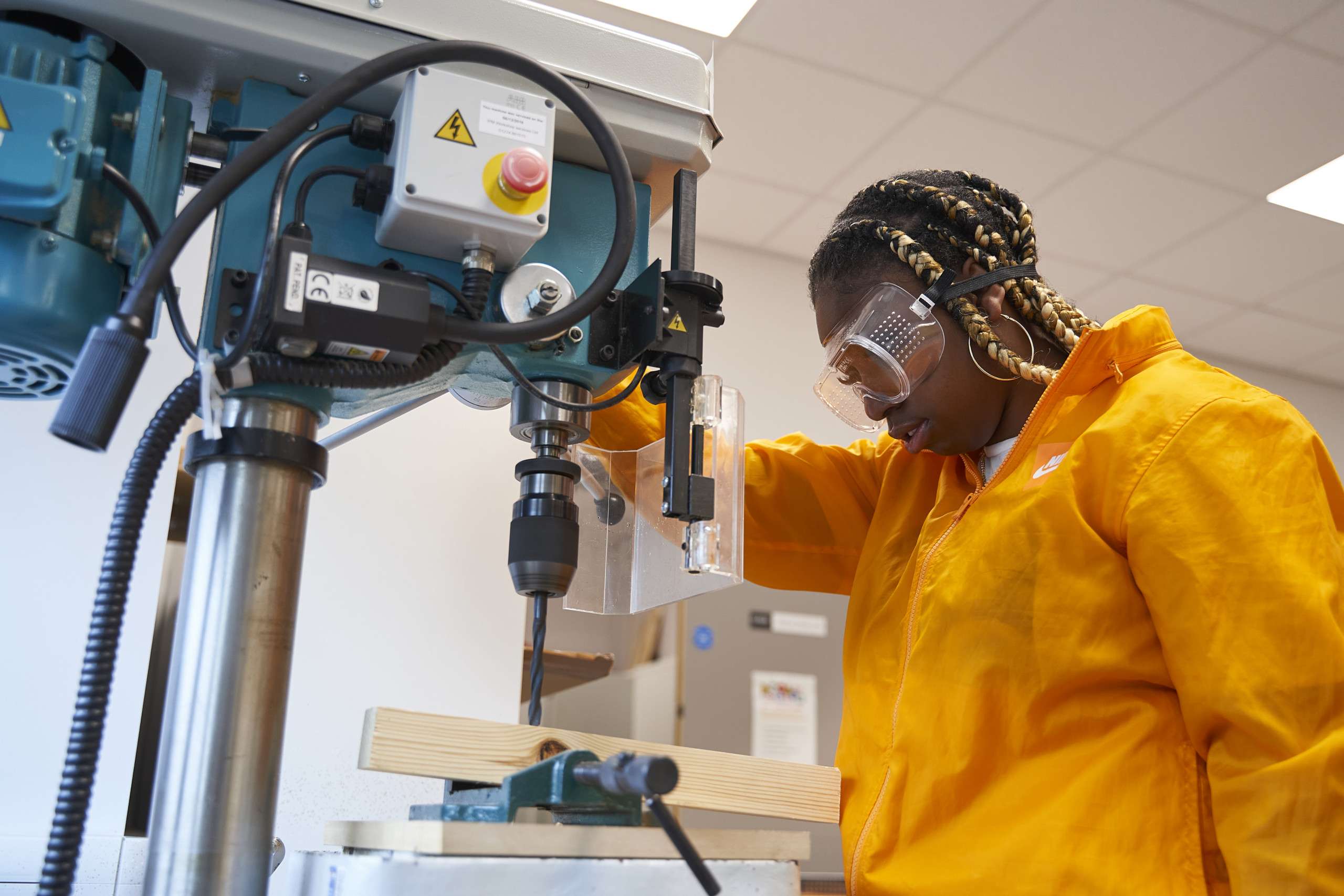
Students will gain experience of a wide range of materials and processes, including timber, metal, plastics, card, textiles and found or sustainable materials. They will also develop skills in areas such as CAD/CAM, model making, prototyping, construction, surface treatment and finishing.
The course encourages students to work independently and creatively while developing the practical, analytical and communication skills needed for further study and careers within design, architecture, product development, engineering and the wider creative industries.
Entry Requirements
- GCSE grade 4 or above or L2 BTEC Merit or above in an art
Course Content
The subject content for A-level AQA 3D Design focuses on developing students’ understanding of the design process alongside practical and creative skills.
Component 1 – Personal Investigation
Students will explore a self-directed area of 3D design and develop a sustained body of practical and written work. They will begin by identifying a design theme, issue, user or context that provides opportunities for creative development.
Research will include the investigation of designers, artists, architects, products, manufacturing methods, materials and cultural influences. Students will use primary and secondary research to generate ideas and will record their development through sketchbooks, worksheets, photographs, drawings, annotations, CAD work and physical models.
Students will experiment with a variety of materials and processes before selecting appropriate techniques for their final outcome. They will develop prototypes and models, evaluate their effectiveness and make improvements throughout the design process.
The final outcome should demonstrate a clear relationship between research, experimentation, development and resolution.
Component 2 – Externally Set Assignment
Students will respond to an externally set starting point provided by AQA. They will interpret the theme in their own way and produce a personal project demonstrating their ability to research, experiment, develop and refine ideas.
Students will investigate relevant designers and practitioners and explore a range of materials, construction techniques and processes. They will record their creative journey and demonstrate how their ideas evolve through experimentation and critical evaluation.
The project concludes with a period of supervised practical work in which students produce a final outcome based on their preparatory studies.
Practical Skills and Development
Throughout the course, students will develop a broad range of practical and design skills. These may include:
- Freehand and technical drawing
- 2D and 3D sketching
- CAD and digital modelling
- Scale drawing and model making
- Prototyping and testing
- Wood and timber construction
- Metalwork and fabrication
- Plastics and manufactured boards
- Sustainable and recycled materials
- Surface decoration and finishing
- Joining and construction techniques
- Photography and presentation
- Research and contextual analysis
Students will be encouraged to select materials and processes that are appropriate to the intended purpose, appearance and context of their designs.
Assessment
Component 1 – Personal Investigation
Personal investigation and practical portfolio
60% of A Level
Students produce a major project based on a personal starting point. This consists of:
- A portfolio of supporting studies
- Research into relevant practitioners and contextual influences
- Development and refinement of ideas
- Experimentation with materials and processes
- Models, prototypes and practical investigations
- A final realised outcome
- A written element demonstrating critical understanding of the project
Assessment considers the development of ideas, experimentation, recording, refinement and the quality of the final outcome.
Component 2 – Externally Set Assignment
Externally set assignment
40% of A Level
Students respond to an AQA-set theme or starting point and develop their own individual interpretation.
Preparatory period:
Students produce research, drawings, experiments, models and development work in preparation for their final response.
Supervised time:
Students complete a final practical outcome during the controlled assessment period.
Assessment focuses on the ability to develop and refine ideas, experiment with materials and processes, record observations and produce a resolved final outcome.
Future Opportunities
A-level 3D Design provides students with a strong foundation for progression into higher education, apprenticeships and employment within creative and technical industries.
The practical and analytical skills developed during the course can support progression into subjects such as product design, furniture design, architecture, interior design, industrial design, engineering, model making, set design and sustainable design.
Possible careers include:
- Product designer
- Industrial designer
- Furniture designer
- Architectural designer
- Interior designer
- CAD designer
- Model maker
- Design engineer
- Exhibition or set designer
- Design technician
- 3D visualiser
The course also develops transferable skills including creative problem-solving, project management, independent research, practical making, digital communication, critical thinking and presentation.
Students considering university or specialist training should check individual entry requirements with the relevant institution.