

Product Design has given me the opportunity to combine creativity with problem-solving to develop design, technical and project management skills.
Maria Sorgho

A Level, AQA
Course Description
This creative and thought-provoking qualification gives students the practical skills, theoretical knowledge and confidence to succeed in a number of careers, especially those in the creative industries. They will investigate historical, social, cultural, environmental and economic influences on design and technology, whilst enjoying opportunities to put their learning into practice by producing prototypes of their choice.
Students will gain a real understanding of what it means to be a designer, alongside the knowledge and skills sought by higher education and employers.
Entry Requirements
- GCSE English Language grade 4 or above
- GCSE Mathematics grade 4 or above
- GCSE grade 6 or above or L2 BTEC Distinction in a design course
Course Content
The subject content for A Level Product Design is divided into three components:
Paper 1 – Technical Principles
Students will explore different materials such as wood, plastic, metal and composites. They will learn about the characteristics of the different materials and their applications. Through the study and practical investigation of a variety of products, students will assess appropriate methods of enhancement, finishes and forming.
Students will study modern manufacturing and commercial practice. They will develop the ability to discuss a variety of modern manufacturing methods and ideas, including the use of computer programmes and ICT, marketing and communication, and Health and Safety. They will also explore product life cycles, safety for workers and consumers, inclusive design and intellectual property rights, in order to become experts in product development and improvement.
Paper 2 – Designing and making principles
Students will draw on and apply the range of skills and knowledge acquired from studying technical principles to inform their decisions in design, and the application or development of technology.
Students will explore social, moral and ethical issues in product development with a focus on responsible design. Students will look in detail at national and international standards for product design and look at how culture and technology impacts change in design. For example, they will study how the British Standards Institute ensures the safety of electrical consumer products like hedge trimmers, or how a change in legislation has affected washing machine design.
NEA
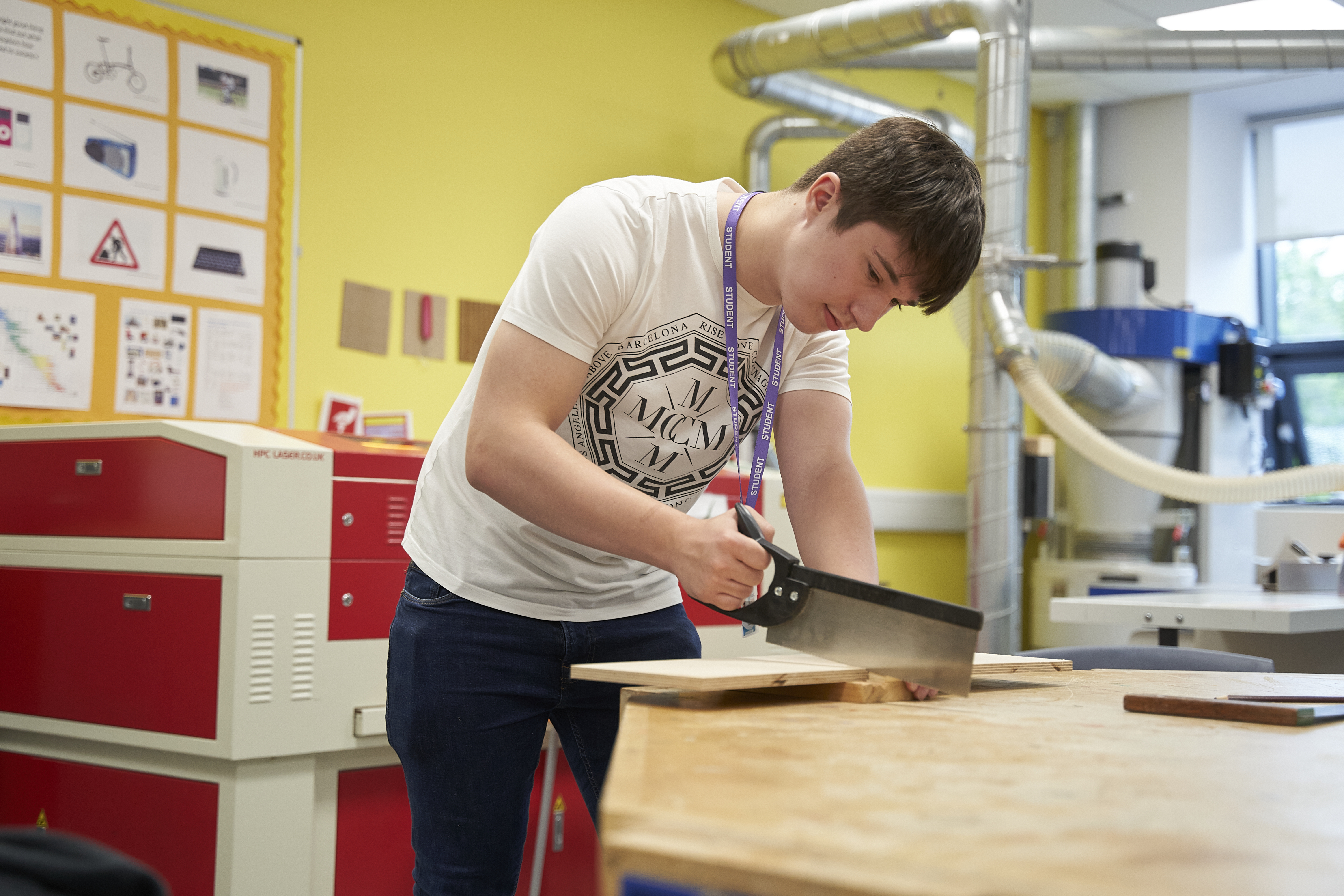
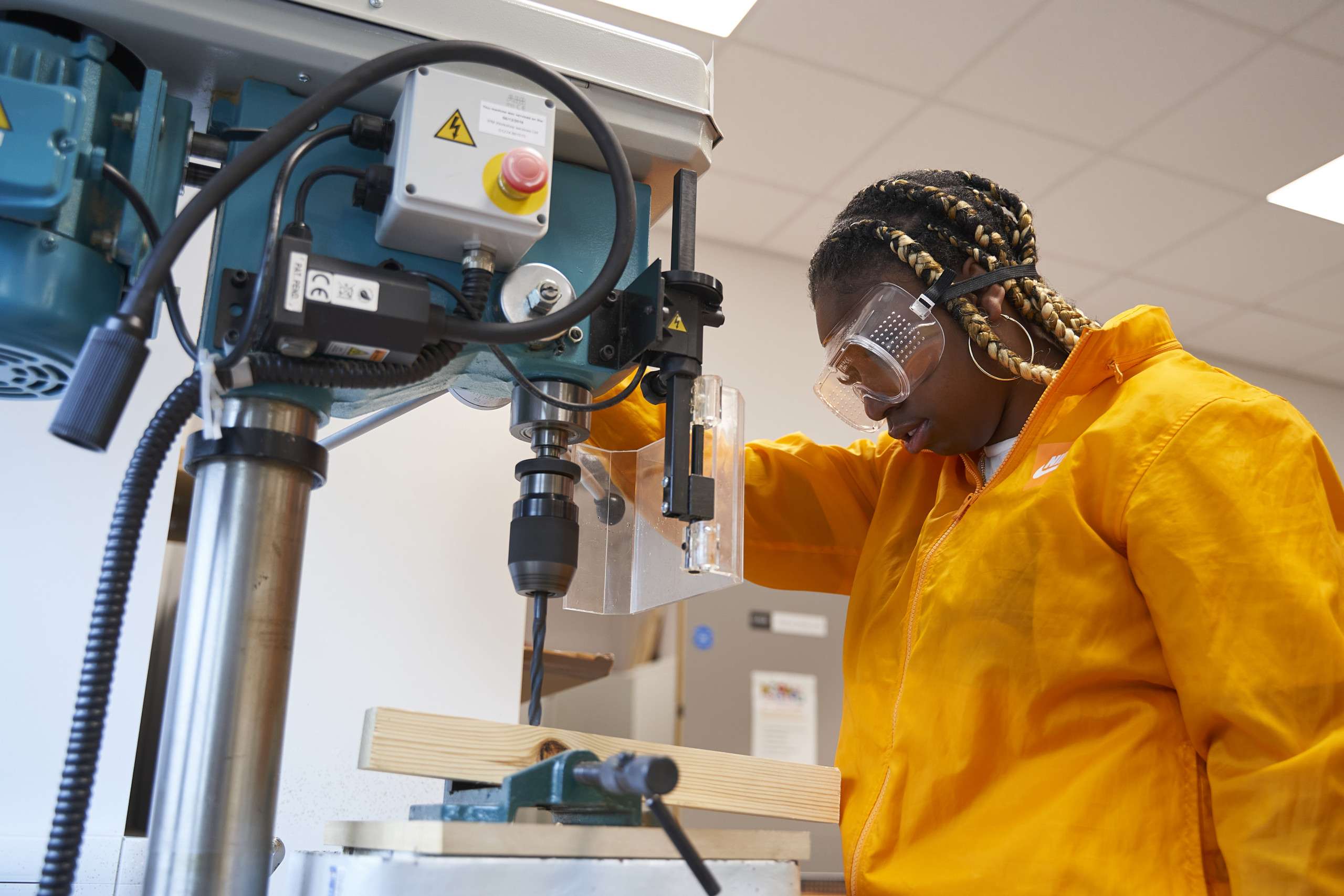
Students will undertake a practical project to develop a prototype for a product, using the knowledge developed whilst studying for Paper 1 and 2. Students will be working with a real client answering a live brief. They could be creating a product to assist a person with a physical disability or adapting a product to make it accessible for an elderly person. They could look at creating a collection box to help raise funds for a charity, or a toy for a child to interact with. Students will be responsible for project management, research and development, testing and manufacture along with quality assurance and quality control. Students will develop their analysis and evaluative skills in order to make feasible modification suggestions and record the evolution of their ideas in an digital A3 portfolio, including photographic evidence of their final prototype.
Assessment
Paper 1
Written exam: 2.5 hours
120 marks
30% of A Level
Questions:
- Mixture of short answer and extended response questions
- Mathematical questions
Paper 2
Written exam: 1.5 hours
80 marks
20% of A Level
Questions:
- Mixture of the short answer and extended response questions
- Section A: product analysis: 30 marks
- Up to 6 short answer questions based on the visual stimulus of product(s)
- Section B: commercial manufacture: 50 marks
- Mixture of short and extended response questions
- Mathematical questions
Non-exam assessment (NEA)
Substantial design and make task
100 marks
50% of A Level
Evidence:
Written or digital design portfolio and photographic evidence of final prototype.
Future Opportunities
Students will develop confidence and a real understanding of what it means to be a designer. Students’ creativity and organisational, communication and presentation skills will allow them to access a wide range of higher education courses and careers such as: design and development engineer, ergonomist, product
developer, CAD Designer and architectural designer.
Learners should always check the entry requirements for degree programmes with specific higher education providers.