

I have improved my knowledge of camera settings. We have explored different photography styles and genres, which has prepared us for our own work.
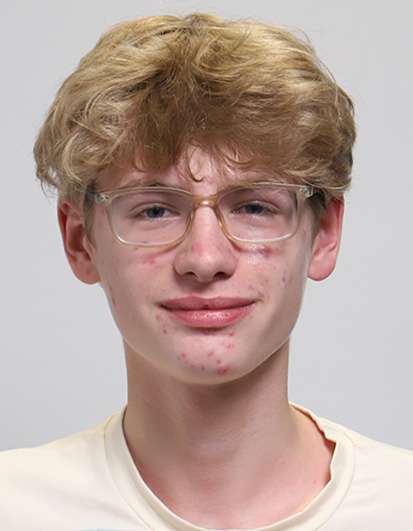
Kayden Scott
A Level, AQA
Course Description
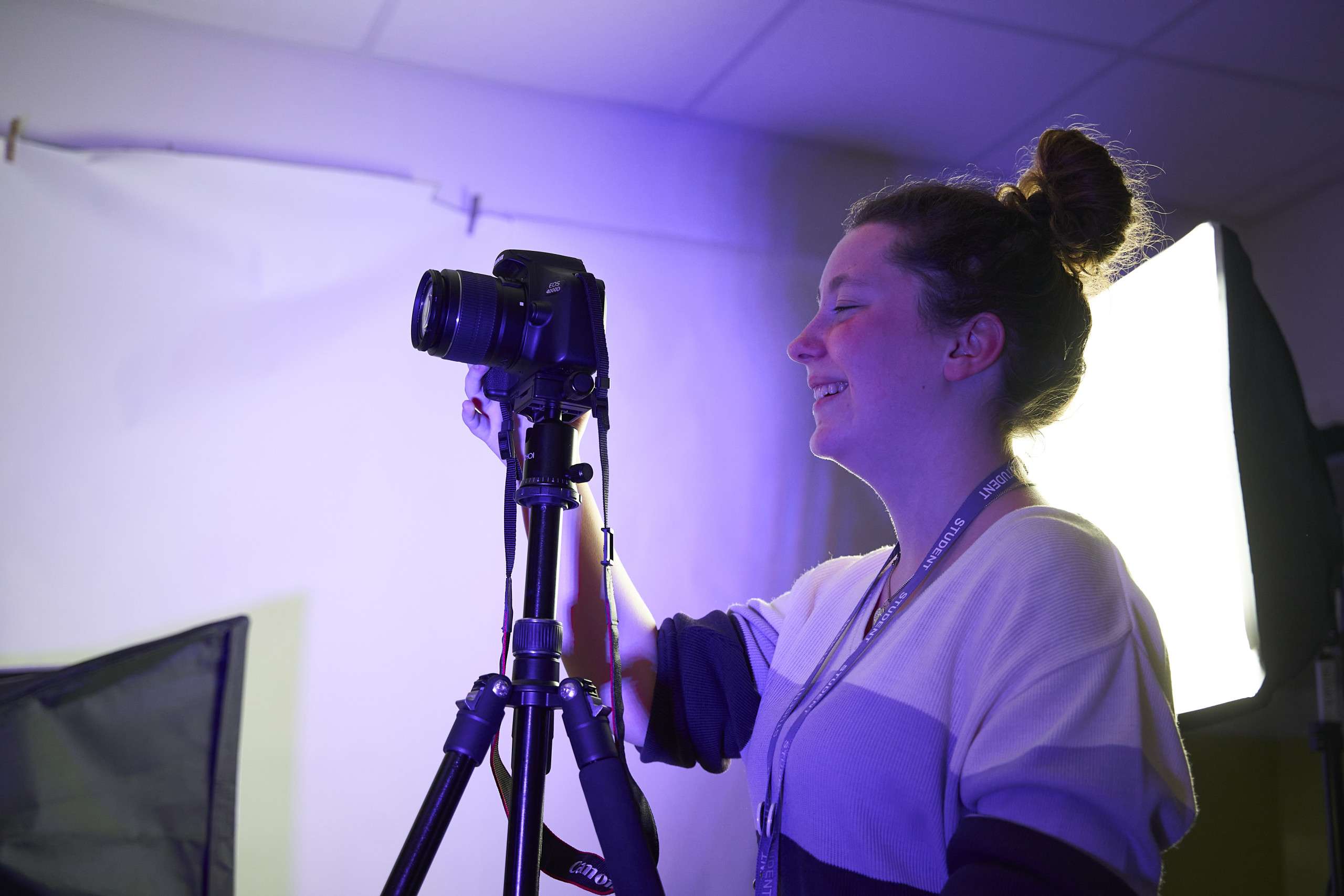
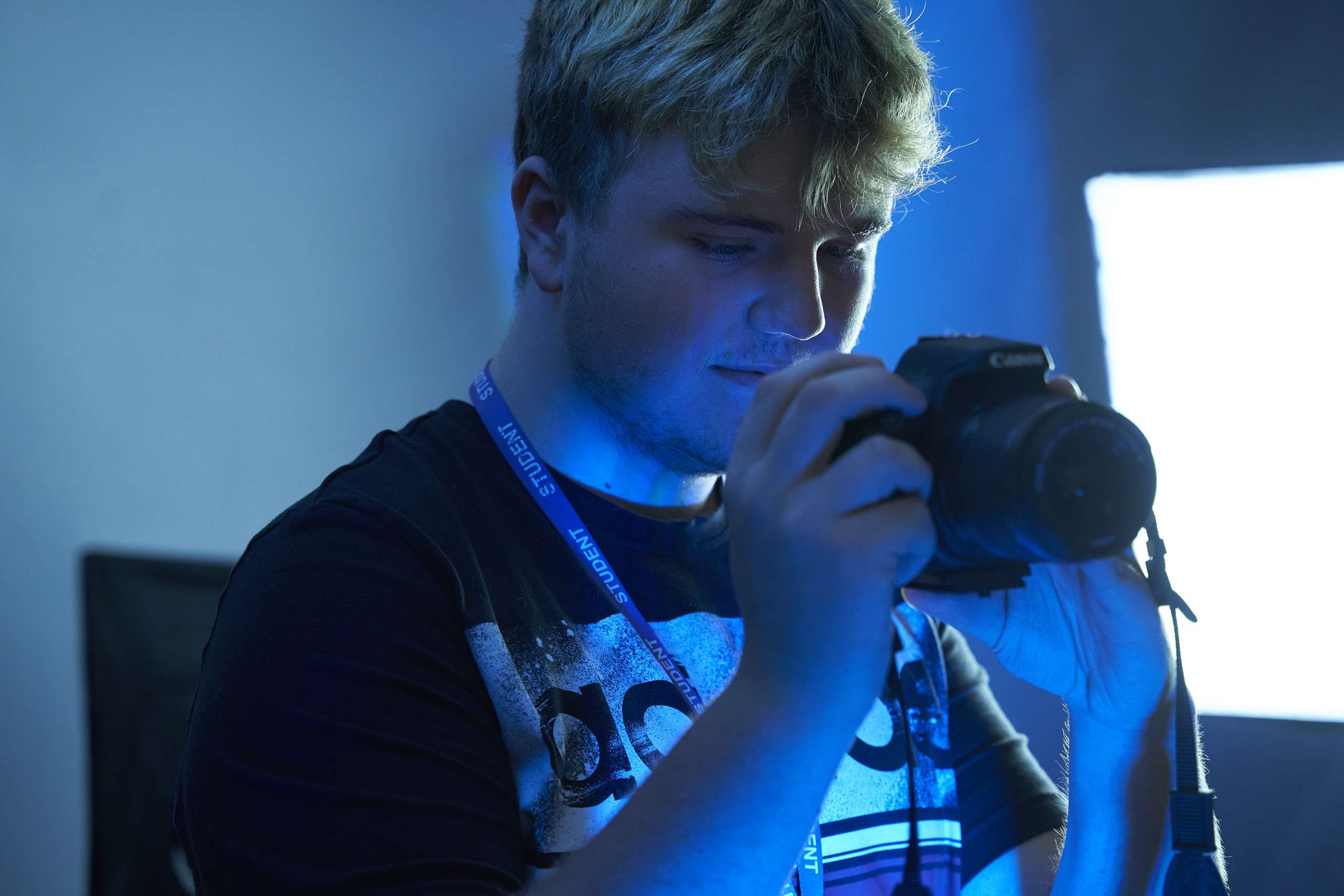
During the two-year Art, Craft and Design (Photography) A Level, students will encounter a broad range of techniques and processes, and develop skills, ideas and experiences that support their creation of high-quality photography. Work produced on this course will demonstrate the use of creative skills to develop individual thoughts, feelings, observations and ideas within their projects.
The course will introduce students to all aspects of photography through a multimedia approach which could include portraiture; landscape photography (working from the urban, rural, and/or coastal environment); still-life photography (working from objects or from the natural world); commercial and product photography with a graphic design focus (photographing products with an intention to advertise, sell and promote); Editorial photography with a graphic design focus (images that accompany an article or support a narrative); documentary photography; photojournalism and fashion photography.
Students will explore both hand manipulation techniques in a fine art focused project (fine art, painting, weaving, drawing, printmaking with photography) and digital manipulation methods exploring the adobe suite (graphic design, digital collage and illustration). Students will learn vital photographic skills as well as studying the work of other photographers and artists to inspire their work. They will learn analytical skills in studying the work of others, as well as creating meaningful collections of their own.
Entry Requirements
GCSE English Language grade 4 or above is desirable.
GCSE grade 6 or above or L2 BTEC Distinction or above in an art related course. Where a candidate without these grades demonstrates exceptional performance through the scrutiny of a portfolio by the Director of Faculty, a place may be given.
Course Content
A Level Year 1
During Year 1 students will follow a broad project within their discipline with a given theme. In the first term they will be challenged to develop an understanding of a wide range of techniques and processes within their specialisms. Students will be taught new skills which they can begin to use and develop with a high level of competency. Students will link their work to a given theme and through out their practical explorations they will research and analyse the work of artists and practitioners across all disciplines, as well as critically reflect on their own work as it develops. In the latter part of Year1 students will begin to develop their own work from a chosen theme utilising the key skills they have developed. This will result in a final outcome in a medium, and using techniques, of their own choosing.
Component 1 – Personal Investigation
In Component 1, students develop work based on an idea, issue, concept or theme leading toa finished outcome or a series of related finished outcomes. Practical elements will make connections with some aspect of contemporary or past practice of artists, designers, photographers or craftspeople and include written work of between 1000 and3000 words to support this practical work. Students will continue to employ skills learnt in Year 1 and work with ever-increasing levels of independence. This will result in a body of work and final outcome that will form 60% of their overall A Level result.
Component 2 – Externally Set Assignment
In Component 2, students respond to a stimulus, provided by AQA, to produce work which provides evidence of their ability to work independently within time constraints. They will develop a personal and meaningful response which addresses all the assessment objectives and leads to a finished outcome, or a series of related finished outcomes. They will then sit a 15-hour practical exam that is the culmination of this preparation. This will form 40%of their overall grade.
Assessment
All work is finally assessed at the end of Year Two Component 1 – Personal Investigation
96 marks
60% of A Level
NEA (non-exam assessment): portfolio of work, final outcome(s) and 1000-3000 word essay.
Component 2 – Externally Set Assignment (non-exam assessment followed by 15-hour external exam)
96 marks
40% of A Level
Portfolio of preparatory work, and a final outcome generated in a 15-hour exam session in the summer.
Future Opportunities
Art and Design subjects can lend themselves to abroad variety of future opportunities. The skills learnt and developed throughout the course are extremely important if students wish to progress onto Visual Art courses offered by Higher Education institutions or obtain a career within the creative industry. Career opportunities following on from these courses are endless, but some examples may include
Photography:
Graphic designer, magazine features editor, medical illustrator, photographer, press photographer, television camera operator, advertising art director, digital marketer, film/video editor, media planner, visual merchandiser, web designer. Learners should always check the entry requirements for degree programmes with specific higher education providers.